This is the first in our winter series on stability: the idea that a business grows more easily from a steady base than from one that lurches from one deadline to the next. Christmas is a good place to start, because it is the one peak every business can see coming.

If you want to prepare your business for Christmas, plan backwards from your longest lead time. Start with the decision that takes longest to put in place, fix the dates that follow from it, and by October the plan should already be running, with only the final checks left. Then hold your nerve on price, and bring your team with you. That is what years in retail taught me, and it applies to any growing business, whether you sell products or services.

In the 1990s I worked for Superdrug. Every year the company ran a competition called Premier Crew to find the store best prepared for Christmas trading. A manager from head office was paired with an area manager, and together they visited every store in the area and picked a winner, who went through to a regional round and then the national final. I was involved in the early rounds, and it was hugely enjoyable. The effort every store put into being at its absolute best for Christmas was remarkable, and this was a time when store managers had a much freer rein over festive decorations than they do now. It wasn’t quite up there with Deck the Halls (the film, which is apparently now a Christmas classic), but some stores pushed it hard!

One image has stayed with me. It was a small store in a small town. We were welcomed with a warm mince pie, and the store was sparkling clean and beautifully decorated, with tinsel, a Santa and even a grotto. But the shelves were light, and for all its tidiness it didn’t look well stocked. I asked the manager whether deliveries were late. “Oh no,” he said, “it’s just really difficult getting the stock down. Our warehouse is on the first floor.” Was the lift broken? He pointed at the grotto. They had turned the stock lift into Santa’s grotto.

We changed that, and I still laugh about it. But it makes the point better than anything I could write: what wins at Christmas isn’t what customers see. It’s the planning behind it, right down to how the stock actually reaches the shelves.

When should you start preparing your business for Christmas?

Start with whatever takes longest. In retail, Christmas starts almost a year ahead. Buyers review last Christmas’s results in January, seasonal ranges are confirmed by spring, orders are placed by early summer and stock starts arriving in late summer. By October the big decisions are long made, the key dates are known, and the work left is crossing the t’s and dotting the i’s.

Every sector has its own longest lead time. For a retailer it is buying. In the hotels I have worked with, the rule of thumb was that Christmas planning was the first big task for the general manager on returning from the summer holiday. For a consultancy or agency it may be agreeing client deadlines before the break, or booking cover for the days you’ll be away. Find yours, and work back from it:

  • List the decisions your Christmas depends on: stock, staff, cover, pricing, client deadlines, opening hours.
  • Note how long each one takes to put in place, and the date it must be done by.
  • Put those dates in the diary now, starting with the one that needs the longest run-up.

Leave it until December and you are reacting to the rush rather than running your business through it.

Christmas is also so much longer than one day. The run-in starts with Black Friday, which falls on 27 November this year, and many clients start winding down in mid-December. In 2026 Christmas Day is a Friday. Boxing Day falls on a Saturday, so the bank holiday moves to Monday 28 December, and New Year’s Day is Friday 1 January. That is a long stretch when people are away, before you allow for winter weather and the inevitable seasonal bugs.

How busy it gets depends on your sector. Retail rarely has a quiet day now. The Christmas sales used to start on Boxing Day, but hold your nerve as a shopper and you may find that retailers have lost theirs well before the 25th! And online Christmas Day itself has become a big trading day: in 2025, it saw some of the strongest single-day growth in UK online sales, with fashion and footwear revenue up 50% on the year as the sales started early. Hospitality is flat out until New Year. Agencies and professional services are often quieter, because their clients are on holiday, and that dip needs planning just as carefully as anyone else’s rush.

What should your Christmas plan cover?

So much of a good Christmas comes down to planning, and in a store that planning is very practical. When do the price changes go through, and when do the shelf-edge labels change with them? When do the promotions change over? Who works the deliveries and refills the shelves, and who covers the late-night shopping hours? The list is nearly endless.

Then there is the stock itself. In a Superdrug store, the busiest weeks before Christmas could bring in two to three times the sales of a quiet week. All the Christmas-only stock, the gift sets and seasonal lines, had been sent out to stores by November. So just as the peak arrived, the stockroom was full of Christmas stock, and the store was selling more of almost everything else too, which meant bigger and more frequent deliveries to unpack, store and get onto the shelves. Every inch of space, and every route from the stockroom to the shop floor, mattered. Which is exactly why turning the stock lift into a grotto was such a problem.

Thinking back more than thirty years, the Premier Crew judges looked at five areas. They are still a good Christmas checklist, and each one has an equivalent in any business.

AreaWhat the judges looked for in a storeWhat it means for any growing business
Stock managementA tidy, organised stockroom; the right stock levels; fast sellers replenished during the day; a plan for where the extra stock is held before the peakCapacity: enough people and hours for the work you have committed to, and a plan for where the extra work will go
Look and feelPoint-of-sale material in place, impactful windows, end displays properly filled, every light working, the right music, even the right smell; staff making eye contact, saying hello and being helpfulFirst impressions: website, email signature and out-of-office up to date; clients getting a quick, warm reply
Operations and checkoutQueues managed, all equipment working, till areas clean and impulse lines stocked, gift cards easy to buy, everyone clear on the returns policy, no stock cages in the aislesSystems that work under pressure: bookings, invoicing and payments; everyone clear on cut-off dates, emergency contacts and policies
StaffingShifts well planned, extended opening hours covered, out-of-hours replenishment where needed, the team trained and motivatedA fair holiday rota agreed early, cover booked, and everyone knowing the plan
Marketing and communicationsPromotions, opening hours and messages clear and consistent, in store and from head officeOpening hours, response times and any offers published early; social posts scheduled in advance

Two more things are easy to miss. Set a cut-off date for new work before the break, and tell clients what it is. And send your invoices early, because January is when many businesses feel the pinch.

How do you hold your nerve on pricing and discounts?

Every retailer faces the same question in December: how long do you hold full price before you start marking down to clear before Christmas? Move too early and you give away margin you didn’t need to. Leave it too late and you are left with stock you can’t sell.

Black Friday made this much harder. I was working in ecommerce when it arrived in the UK, and the early years were scary. Argos, Boots, John Lewis and Currys PC World all had major website outages, never mind the scenes in their stores.

The bigger damage was quieter, and it was to margin.

What happenedWhat it did to margin
December sales pulled forwardInstead of creating extra sales, Black Friday largely moved full-price December sales into discounted November ones. Customers got a discount on things they would happily have paid full price for a few weeks later.
The volume trapTake 20% off an item with a 60% gross margin and the profit on each sale falls by a third. To make the same return you need 50% more sales, which strained websites, warehouses and delivery networks.
ReturnsImpulse buying pushed return rates up, especially in fashion and tech. Processing returns and writing off opened stock ate into whatever profit was left.

Some retailers came close to marking down seasonal stock they needed to sell at full price in December. The lesson was to buy stock specially for Black Friday, so the promotion didn’t wreck their Christmas margins.

The principle for any business is to decide your trigger points in October, not in a panic on 18 December. For a service business, holding your nerve means not discounting to fill a quiet week, and not taking on work you can’t deliver well before the break. Decisions made calmly in advance are better than decisions made under pressure, and they are much easier to make from a stable base.

How do you get your team behind the Christmas plan?

The run-up to Christmas asks a lot of people, so they need to understand the plan and be bought into it. Share it early, and explain why, not just what.

The rota matters more than most people think. Whether in a store or a head office support team, somebody has to be available in Christmas week and the week after, and that takes organising rather than assuming. If Christmas leave doesn’t look fair, it can demotivate a team quickly, so agree it early and make the reasoning clear. And say thank you: a busy December is a team effort.

What if there’s no team to cover you over Christmas?

For many growing businesses, cover is the real problem. If you work alone, or your small team all want the same days off, start by telling your clients your plan: when you are available, when you are not, and what to do if there is an emergency. Most clients are happy with clear expectations. It is surprises that cause problems.

This is also where flexible support helps. A Virtual Expert can answer your phones and manage your inbox, keep client admin and invoicing moving, or schedule your social media in advance. Book early, though: their diaries fill up before Christmas too.

Your Christmas preparation checklist

  • As early as your longest lead time needs: make the big decisions (stock or capacity, pricing and promotions, client cut-off dates, cover) and put the key dates in the diary.
  • October: final checks. Confirm the rota, the cover and the dates. The plan should already be running.
  • November: schedule social posts, publish your opening hours and response times, and send invoices early.
  • December: run the plan, protect your key people and keep a short daily check-in.
  • January: review what worked and what didn’t while it is fresh, and write it down as the starting point for next year’s plan.

That last step is the one most businesses miss. The best input to next Christmas’s plan is what you learned this time.

From a stable Christmas to a strong January

The businesses that plan Christmas start January in control, not recovering. A busy season handled calmly is what stability looks like in practice, and it is where our winter series, Stability: A Place to Stand, begins. Over the coming weeks we will look at the other things that can knock owner-led businesses off balance, starting on 24 November with what happens when everything rests on one person.

If you would like cover in place before the rush, talk to your local Regional Director now!

Frequently asked questions

When should a small business start preparing for Christmas?

Work back from your longest lead time. Retailers start buying for Christmas almost a year ahead; for a service business the longest lead time might be agreeing client deadlines or booking cover. Either way, by October the plan should already be running, with only final checks left.

How do I cover my business over Christmas if I work alone?

Tell clients when you are available and what to do in an emergency, set a cut-off date for new work, and arrange cover for phones, the inbox or urgent admin. A Virtual Expert can provide that cover, but book early.

Should I discount before Christmas?

Only if you decided to in advance, and know what it costs. A 20% discount on a product with a 60% margin cuts the profit on each sale by a third, so you need 50% more sales to stand still. Set your trigger points in October, and if you sell products, consider stock bought specially for promotions such as Black Friday to protect the margin on seasonal lines.

What should I tell clients about Christmas opening hours?

When you close and reopen, how quickly you will respond in between, the last date for new work, and who to contact in an emergency. Publish it in November and repeat it in your email signature and out-of-office message.

How do I plan staff holidays over Christmas and New Year?

Agree the rota early, make sure every working day is covered, and explain the reasoning so it feels fair. Rotating the busiest days from year to year helps.

What should I do in the quiet week between Christmas and New Year?

Review the year, and capture what you learned about Christmas while it is fresh. It is the best input to next year’s plan.



About the author


When priorities compete and the workload keeps growing, your mission and values are the quickest way to decide what to do now, what to hand over and what to drop.

Everything on this list is urgent. So where do I start?

As the end of the year approaches, work can start to feel like one long list of competing demands. Marketing needs attention, the finance deadlines won’t move, admin keeps piling up, and your team keeps asking which of it matters most. Everything is shouting at once.

A to-do list can’t settle that for you. It treats every item as equal, and the most urgent things are rarely the most important. What you need is a filter, and most businesses already have one, even if nobody has looked at it for years: a clear sense of what the business is for and how it wants to work. In other words, its mission and values.

What we learned rewriting our own

Rebecca and I have spent the last few weeks revisiting Get Ahead’s mission, vision and values. The old versions weren’t wrong, and they read well on the website. But when we asked whether they helped us make actual decisions, the answer was mostly no.

So we rewrote them to do specific jobs. As we open new regions, our values need to help us judge whether a prospective Regional Director is the right fit. They need to show Virtual Experts that joining Get Ahead means joining a network, not signing up to a job board. And our goals need to keep the two of us focused on a small number of priorities rather than on whatever lands in the inbox.

The lesson was simple. If your mission and values can’t help you make a decision, they’re decoration.

What useful mission and values look like in a small business

A mission says what you do and who you do it for, in a sentence you could say out loud without cringing. Values describe how you work, in terms specific enough to rule some choices out. “Excellence” rules nothing out, because nobody sets out to be mediocre. “We reply to every client within one working day” or “we’d rather turn work down than overpromise” does, and your team can check themselves against it.

You don’t need many. Three to five values that people can remember will do more than a list of ten that nobody can recall. They also need to be written down and shared, so they guide the whole team rather than only the person who wrote them.

A quick test: think of a decision you made last month, perhaps a client you took on or a request you said yes to. Would your mission and values have pointed the same way? If they wouldn’t have helped either way, they need sharpening.

Do it, delegate it or drop it

Once your purpose is clear, it becomes a practical filter for the list. For each item, ask three questions.

Does this move us towards what we’re here to do? If not, it’s a candidate for dropping, however urgent it feels. Does it need me, specifically? If it matters but doesn’t need your judgement, it’s a candidate to hand over. Would anyone notice if it stopped? Some regular tasks carry on long after the reason for them has gone.

What’s left is the work that only you can do and that moves the business forward, and that is where your time should go. As the year closes, it’s also worth asking one bigger question: if you could add one thing to the business next year and remove one thing, what would they be?

Giving your team a message they can use

A clear purpose isn’t only for the owner. When everyone can explain in a sentence what the business does and why, they make better calls without checking back, and they describe you consistently to customers, suppliers and anyone else who asks. That consistency is a large part of what people come to trust.

Try asking a few people in your team to describe the business in one sentence. If the answers vary widely, that’s worth knowing, and it’s a cheap problem to fix. There’s more on getting a team pulling in the same direction in how to improve performance in a growing business.

Where Get Ahead can help

Much of what lands in the “delegate” pile is the work our Virtual Experts do every day: marketing, bookkeeping and finance support, admin, and the operational tasks that crowd out thinking time. They are experienced, UK-based professionals, and your local Regional Director takes the time to understand how your business works, and what it’s for, before matching you with the right person.

If your list feels longer than your week, let’s talk about what’s taking up your time and where the right support would make the biggest difference. Find out more about our services or call 0330 223 7580.

Frequently asked questions

What is the difference between a mission and values?

A mission says what your business does and who it is for. Values describe how you go about it: the standards and behaviours you expect from everyone in the business, including yourself.

How many values should a small business have?

Three to five is usually enough. A few specific values are easier to remember, and more useful when making decisions, than a long list.

How can mission and values help with prioritising?

They give you a test for each task: does it move the business towards its purpose, and does it fit how you want to work? Tasks that don’t are candidates to drop.

How do I decide what to delegate?

Hand over work that matters but doesn’t need your personal judgement, such as regular admin, bookkeeping or social media scheduling, and keep the decisions only you can make.

Get in touch: martin@getaheadva.com   |   Explore our support: getaheadva.com


Six practical ways to improve performance in a growing business when everyone is busy but things still slip.

We’re busier than ever. So why does it feel like we’re getting less done?

If you run a growing business, you may recognise that thought. The team has grown from three people to eight. There are more clients, more projects and more conversations, and everyone is working hard. Yet things that used to happen without anyone thinking about them now slip through: a client follow-up nobody sent, a decision made in one meeting that half the team never heard about, a project everyone assumed someone else was leading.

Nothing is broken, exactly. The business has simply outgrown the informal way it used to work, when most of it ran through the owner’s head and a quick word across the desk was enough to keep everyone in step.

Most advice on improving performance is written for large organisations with HR departments and layers of management. This article is for founders, owners and small teams who need things to work better without adding bureaucracy. From my consultancy work, and from running Get Ahead with Rebecca, I’ve found that when you want to improve performance in a growing business, the answer is rarely a new initiative. It is usually clarity: about what matters, who owns it, and how people find out.

Start with one problem, not six

Before you change anything, pick the single performance problem that is costing you most right now. It might be slow client onboarding, invoices going out late, or a project that keeps drifting. Decide what “fixed” would look like, talk to the people closest to the work, agree two or three actions, and put a review date in the diary.

That may sound modest. It is meant to. A focused fix builds momentum, shows you what works in your business rather than in theory, and gives you something to repeat elsewhere. The five areas below are where most of those problems start, so use them to help you choose.

Is everyone working towards the same thing?

In a small business, the plan often lives in the owner’s head. That works until the team grows past the point where everyone overhears everything. Write down the three or four priorities that matter most this quarter, in plain language, and share them.

Then check that each person can see how their work connects to at least one of them. If someone can’t, either the priority isn’t clear enough or they are spending time on the wrong things, and both are worth knowing. For each priority, agree how you’ll tell whether it’s on track and name one person to lead it. One name, not a committee.

Who actually owns this?

The project that everyone supports and nobody owns is one of the most common reasons good businesses stall. Fiona Ibbetson, our Regional Director for Yorkshire, writes about this well in her piece on project accountability.

In owner-led businesses the hardest part is often the owner letting go. If every decision still needs your approval, you have become the bottleneck, however capable the people around you. Real delegation means agreeing the outcome and the boundaries, then stepping back and letting people decide how to get there. The same applies to outside support. A Virtual Expert given a clear outcome and the authority to act will usually achieve far more than one handed a list of tasks.

Do people hear about decisions at the right time?

Communication problems in small teams are rarely about volume. They are about timing and reasons. People find out about a decision after it has already affected their work, or they hear what changed but not why. Explaining the why matters more than it seems, because it lets people make sensible calls on their own without checking back each time.

Suzanne Evett, our Regional Director for Berkshire, makes a related point in what corporate conference planning taught her about owner-led businesses: people cannot act on information before they are ready to. So think about when people need to know something, not only what they need to know.

It also helps to agree where decisions live. If they are scattered across email, WhatsApp and memory, some will be missed. One agreed place, whether that is a Teams channel or a shared document, is enough. And make it two-way: ask regularly what is getting in the way, then act on at least some of what you hear.

Which processes are slowing you down?

Capable people are held back most by unclear responsibilities and by processes that made sense when the business was smaller. Three places usually leak time: tasks done differently every time, tasks only one person knows how to do, and manual jobs that repeat every week.

Some of these can be automated, and our article on using automation to eliminate repetitive tasks covers where to begin. Some just need writing down on a single page. Others are better handed to someone else entirely, particularly the admin, bookkeeping and scheduling that pull owners away from the work only they can do.

Then measure a small number of things that tell you whether customers and your team are better off: the time from enquiry to proposal, the share of invoices paid on time, how often work has to be redone. Measuring everything because you can is its own drain on time.

What does your own behaviour tell the team?

In a small business, culture is largely the owner’s behaviour, multiplied. If you send emails at 11pm, people assume that is expected. If mistakes are met with blame, problems go underground until they are expensive. If you ask for ideas and then act on one, people keep offering them.

Model the behaviour you want to see, respond to concerns consistently, and make it safe for anyone to say “I’m stuck” early rather than late. None of this costs money, and it does more to hold improvements in place than any process.

Where Get Ahead can help

Several of these are easier with the right support around you. Our HR specialists help owners set clear objectives, hold better performance conversations and support people who are managing others for the first time. Our Virtual Experts take on the admin, finance and operational work that crowds out thinking time, so the owner can focus on direction rather than keeping every plate spinning.

Every client works with a local Regional Director, who takes the time to understand how your business runs before matching you with the right people. If one of the areas above sounds familiar, talk to your local Regional Director. The first conversation is about where you are now and what would make the biggest difference.

Frequently asked questions

What is the quickest way to improve performance in a small business?

Choose one problem that is costing you time or money, define what fixed looks like, agree a few actions with the people closest to it and set a review date. Focused fixes build momentum faster than broad initiatives.

How can I improve team performance without micromanaging?

Agree the outcome and the boundaries, name one owner for each priority, then step back. Short, regular check-ins focused on obstacles work better than approving every decision.

What should a growing business measure?

A handful of measures that show whether customers and the team are better off, such as time from enquiry to proposal, invoices paid on time and how often work is redone.

When should a growing business bring in outside support?

When the owner has become the bottleneck, when the same tasks keep slipping, or when specialist skills such as HR or finance are needed for a defined piece of work rather than a full-time role.

Get in touch: martin@getaheadva.com   |   Explore our support: getaheadva.com


One Year In: Natasha Doran on Building the East Surrey and West Sussex Region 

A year ago this month, Natasha Doran launched as Get Ahead’s Regional Director for East Surrey and West Sussex. Twelve months on, she has built a genuine local network from scratch, taken on clients ranging from sole traders to scaling businesses, and become one of the region’s most visible faces at local networking events. To mark her first anniversary, she sat down with Get Ahead Founder Rebecca Newenham to talk through the year: what she expected, what surprised her, and where the region goes from here. 

A change she couldn’t quite plan for 

Natasha left her corporate career around eighteen months before joining Get Ahead, without a fixed plan for what came next. She knew she wanted something different and spent the first few months exploring contract roles that, on closer inspection, looked a lot like the job she had just left. She also completed a coaching qualification she had wanted to do for years, a qualification she still values, though it became clear it suited a role on the side rather than the whole of her working week. 

Get Ahead, meanwhile, kept turning up. “You seem to pop up everywhere on my social media, my LinkedIn,” she told Rebecca, describing what felt at the time more like a coincidence than a plan. A first conversation turned into a series of them over several months. “Within about the first fifteen minutes of us chatting, I was thinking, oh my goodness, this could actually be exactly what I’m looking for.” 

With three young children and a summer of family holidays ahead, Natasha took her time before committing, and joined as Regional Director in September 2025, a start date she had always liked the feel of. The lead-in mattered. Rather than a single handover, the relationship built gradually over several calls, so that by the time she formally started, little felt unfamiliar. 

A mentor and a fast start 

One early surprise was being paired with a mentor, fellow Regional Director Kristy Roff, for the first stretch of the role. “That was such a lovely surprise, having somebody that I can just text.” Natasha says. The support proved useful almost immediately: her first enquiry came in within the first week, through a friendly referral, with Kristy helping her put together her first client proposal from a standing start. 

“I thought the first three months would just be planning and we’d get going in January. Actually, with the events we set up and the contacts I had, it was able to get going pretty quickly.” 

That early momentum set the tone. Natasha was, by her own account, receptive to attending anything, travelling well beyond her immediate local area to build a presence rather than treating her region as a fixed patch. The approach paid off in a faster foothold in the local business community than a narrower strategy would have allowed. 

Finding her own approach to networking 

Early on, Natasha gravitated toward informal, conversational networking events over anything more structured, in part because standing up and pitching yourself to a room is, as she puts it, alien to most people, let alone someone starting out in a new venture. Over the first three months she worked out which events genuinely suited her and which didn’t, a process she now sees as just as valuable as the connections themselves. 

She has since gone on to host her own events, including a regular gathering in Horsham, something she admits she once dreaded the idea of. “Even though that filled me with dread, it’s probably one of the things I’ve enjoyed the most.” Rebecca points to the deliberate care Natasha takes with every attendee, making sure each person is introduced and made welcome, as a large part of why the events work: some people who would never attend a typical networking event come along to hers. 

Natasha also brings a degree of strategy to how she covers her region day to day, mentally dividing it into four areas and making sure she’s engaging with each, whether through events, LinkedIn activity, or simply staying visible to existing connections, rather than concentrating only on the geographically largest patch. 

The clients: a warm introduction and a summer rescue 

Several of Natasha’s early clients came through indirect routes rather than direct pitches. One came from a sales director who attended her regular networking meetings and later passed on a warm introduction when his own HR director needed sales support. Another arrived centrally through Get Ahead’s head office, a relationship that has since grown from initial VA support into marketing work as well. 

The story Natasha returns to in most depth is a client whose business had scaled quickly after a business partner stepped away, leaving him managing far more than he had planned for. Get Ahead placed a VA with him, who has now been working with the client for around seven months, followed by a social media manager. When a separately recruited business development hire fell through just before a planned holiday, he came to Natasha in what she describes as “a bit of a frantic panic”. 

“Being a parent and a wife myself, the one thing you can’t do is cancel that holiday. So being able to work with somebody from our team who was around for six weeks, full time, was just really lovely.” 

It’s the kind of gap that would have been difficult to fill during peak summer holiday season without the wider Get Ahead network behind her, and Natasha points to it as one of the clearest examples of what the model offers clients that going it alone couldn’t. 

What the wider network has meant 

Asked what has made the biggest difference to her first year, Natasha comes back repeatedly to the depth of the wider Get Ahead team, somewhere between eighty five and ninety people working across the network. “I would never be able to put that together with just my own two or three people. Having true specialists, true experts, has been amazing.” 

She also points to the practical, day to day support: a place to check quick questions the way she would with a colleague in an office, proposal templates that saved her weeks when she was starting out, and a genuinely collaborative culture among Regional Directors doing similar roles across different regions. “Everyone genuinely wants people to do the best they possibly can. Having the regions split out has really helped that.” 

Looking ahead 

A year on, Natasha sees the foundations of her region as largely in place: a settled calendar of events she attends and hosts, and a growing base of client relationships. She describes the next phase as a potential springboard, with particular interest from slightly larger businesses who aren’t yet ready to bring on a permanent member of staff, an opportunity she is now thinking about how to tailor for. 

Asked what she would tell herself on day one, her answer is networking itself. “I thought that was something I was just going to have to smile and get on with. Never in a million years did I think I’d be actively putting myself forward to run events and think about where we can start new ones.” 

Rebecca’s closing reflection: “Thank you for sharing your journey. I can’t wait to be doing this again in a year’s time and seeing where you’re at then.” 

Link Up Horsham
Birthday Celebrations

You can read more about Natasha here. And to learn more about the Get Ahead franchise opportunity please click here.


About the Author

Get Ahead has been named Business Support Service of the Year 2026/27 at the Prestige Awards.

Founder Rebecca Newenham collected the award, joined by Natasha Doran, one of Get Ahead’s franchisees, at a ceremony celebrating businesses across the UK and beyond.

Rebecca said:

“It’s recognition not just for me but for every single person across the Get Ahead network who shows up for our clients day in, day out.

Thank you to everyone who’s been part of this journey – clients, franchisees and the wider Get Ahead family. This one’s for you!“

Rebecca singled out Natasha as someone who embodies what the award represents: hard work, a strong interest in the local business community, and a real wish to see the businesses she works with thrive.

The award also marks something of a milestone. Rebecca started Get Ahead from her kitchen table sixteen years ago. Since then it has grown into a UK-wide network, built on the same values that shaped it from day one: reliability, flexibility, and a focus on the people behind the business.

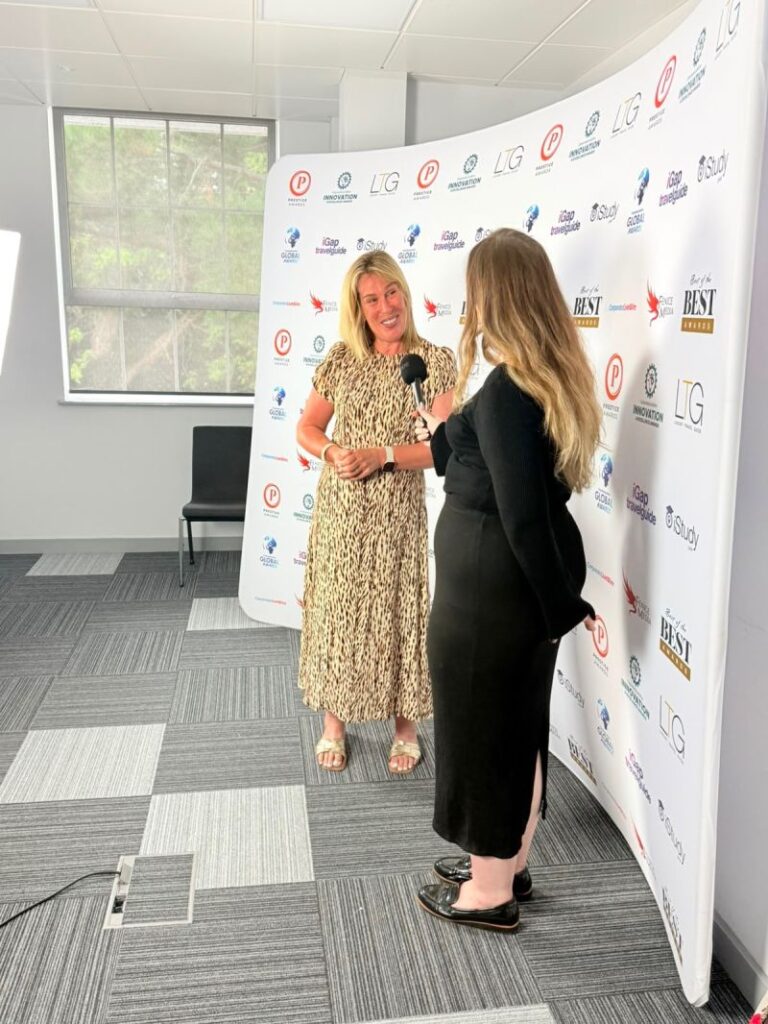
Rebecca Newenham at the Prestige Awards
ReNatasha Doran at the Prestige Awards
Rebecca Newenham at the Prestige Awards

If you’re running a growing or owner-led business and want the kind of support this award recognises, get in touch with the Get Ahead team to find out how we can help.