What corporate conference planning taught me about growing owner-led businesses
By Suzanne Evett
The Operational Edge, Post 4 of 4
I did not set out to build a career in event management. I came from a corporate background in HR and performance, and event planning arrived through the side door: initially something I took on because it needed doing, and gradually something I became good at and sought out.
What I did not expect was how much the discipline of running complex events would teach me about business. Not about events specifically, but about the kind of operational and commercial thinking that underpins any well-run organisation.
This is the final post in a series built around that premise. Not as a neat argument constructed after the fact, but as something I have come to understand through the work itself.
The information timing insight
The most transferable thing event work taught me is deceptively simple: people cannot act on information before they are ready to act on it.
In an events context, this is practical and immediate. Send a delegate their travel details three months before the event and they will not know where to find them when they need them. Send them two weeks before and they will use them. The information is identical. The timing is what changes the outcome.
I apply the same thinking to how I communicate with clients. Not everything needs to be shared immediately. Some things are better held until the moment when they are actually useful. The discipline is knowing the difference, and resisting the temptation to communicate for the sake of it.
What joined-up support actually looks like
One of the things event work made concrete for me is what it means to bring different kinds of expertise together for a single outcome.
An event needs copy written. It needs a logo and a landing page and printed materials. It needs someone to manage registrations, liaise with the venue, brief the AV team, and be on-site when the day comes. None of those things requires the same person. All of them need to work together.
For a client without an internal marketing team, I might pull in three hours of a graphic designer’s time for the branding, write the copy myself, manage the registrations, and bring in additional support on the day. The client gets a complete service without employing anyone permanently. They pay for what they need, when they need it.
That is also, precisely, how Get Ahead works. The model was not new to me because I had already been living a version of it. What Get Ahead provides is the structure, the network, and the matching process that makes it work across a much wider range of business needs than events alone.
What reputation actually builds
My current event clients did not find me through advertising. They found me because someone they trusted had worked with me and recommended me. Several of them were delegates at events I ran for other clients, who subsequently asked me to run events for their own organisations.
Reputation in that sense is not something you manufacture. It is the cumulative result of doing the work carefully, repeatedly, and without making clients feel the effort behind it.
I think about that when I work with businesses through Get Ahead. The support I provide is not visible to their clients. It is not supposed to be. What is visible is the effect: a business owner who is calmer, better prepared, and more present than they would be if they were trying to carry everything themselves.
Why I do this work
I am sometimes asked what the connection is between a corporate HR career, years of running scientific conferences, and being a Regional Director for a business support network.
The honest answer is that they are all versions of the same thing. Understanding what a person or organisation needs to perform well. Building the conditions that make that possible. Getting out of the way when it is working.
The businesses I support through Get Ahead are run by people who are good at what they do. They do not need me to do it for them. They need the operational breathing room to do it better, and the confidence that comes from having the right support in the right place at the right time.
That is what this series has been about: not event management for its own sake, but what the discipline of running complex operations under pressure teaches you about running anything well.
If any of it has resonated, I would be glad to have a conversation. Not a pitch. Just a conversation about where your business is right now, and whether the kind of support I provide through Get Ahead could make a useful difference.
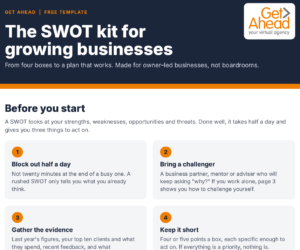
The event planning and debrief framework from Post 3 is available to download here:
About the Author
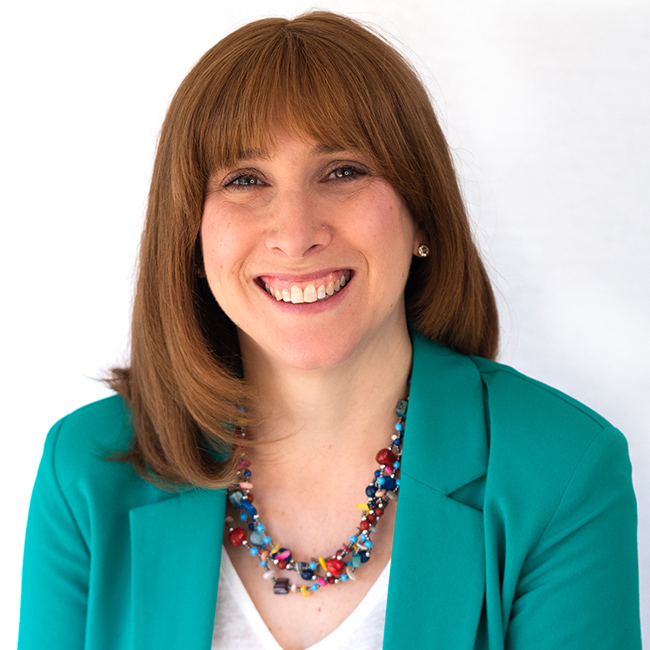
Suzanne Evett is Regional Director for Get Ahead Berkshire. She works with growing businesses across the region, providing flexible, expert business support through Get Ahead’s network of Virtual Experts. She has spent many years running complex events for organisations in the pharmaceutical and scientific sectors, alongside building her own business.
Read more about Suzanne here.