One Year In: Natasha Doran on Building the East Surrey and West Sussex Region 

A year ago this month, Natasha Doran launched as Get Ahead’s Regional Director for East Surrey and West Sussex. Twelve months on, she has built a genuine local network from scratch, taken on clients ranging from sole traders to scaling businesses, and become one of the region’s most visible faces at local networking events. To mark her first anniversary, she sat down with Get Ahead Founder Rebecca Newenham to talk through the year: what she expected, what surprised her, and where the region goes from here. 

A change she couldn’t quite plan for 

Natasha left her corporate career around eighteen months before joining Get Ahead, without a fixed plan for what came next. She knew she wanted something different and spent the first few months exploring contract roles that, on closer inspection, looked a lot like the job she had just left. She also completed a coaching qualification she had wanted to do for years, a qualification she still values, though it became clear it suited a role on the side rather than the whole of her working week. 

Get Ahead, meanwhile, kept turning up. “You seem to pop up everywhere on my social media, my LinkedIn,” she told Rebecca, describing what felt at the time more like a coincidence than a plan. A first conversation turned into a series of them over several months. “Within about the first fifteen minutes of us chatting, I was thinking, oh my goodness, this could actually be exactly what I’m looking for.” 

With three young children and a summer of family holidays ahead, Natasha took her time before committing, and joined as Regional Director in September 2025, a start date she had always liked the feel of. The lead-in mattered. Rather than a single handover, the relationship built gradually over several calls, so that by the time she formally started, little felt unfamiliar. 

A mentor and a fast start 

One early surprise was being paired with a mentor, fellow Regional Director Kristy Roff, for the first stretch of the role. “That was such a lovely surprise, having somebody that I can just text.” Natasha says. The support proved useful almost immediately: her first enquiry came in within the first week, through a friendly referral, with Kristy helping her put together her first client proposal from a standing start. 

“I thought the first three months would just be planning and we’d get going in January. Actually, with the events we set up and the contacts I had, it was able to get going pretty quickly.” 

That early momentum set the tone. Natasha was, by her own account, receptive to attending anything, travelling well beyond her immediate local area to build a presence rather than treating her region as a fixed patch. The approach paid off in a faster foothold in the local business community than a narrower strategy would have allowed. 

Finding her own approach to networking 

Early on, Natasha gravitated toward informal, conversational networking events over anything more structured, in part because standing up and pitching yourself to a room is, as she puts it, alien to most people, let alone someone starting out in a new venture. Over the first three months she worked out which events genuinely suited her and which didn’t, a process she now sees as just as valuable as the connections themselves. 

She has since gone on to host her own events, including a regular gathering in Horsham, something she admits she once dreaded the idea of. “Even though that filled me with dread, it’s probably one of the things I’ve enjoyed the most.” Rebecca points to the deliberate care Natasha takes with every attendee, making sure each person is introduced and made welcome, as a large part of why the events work: some people who would never attend a typical networking event come along to hers. 

Natasha also brings a degree of strategy to how she covers her region day to day, mentally dividing it into four areas and making sure she’s engaging with each, whether through events, LinkedIn activity, or simply staying visible to existing connections, rather than concentrating only on the geographically largest patch. 

The clients: a warm introduction and a summer rescue 

Several of Natasha’s early clients came through indirect routes rather than direct pitches. One came from a sales director who attended her regular networking meetings and later passed on a warm introduction when his own HR director needed sales support. Another arrived centrally through Get Ahead’s head office, a relationship that has since grown from initial VA support into marketing work as well. 

The story Natasha returns to in most depth is a client whose business had scaled quickly after a business partner stepped away, leaving him managing far more than he had planned for. Get Ahead placed a VA with him, who has now been working with the client for around seven months, followed by a social media manager. When a separately recruited business development hire fell through just before a planned holiday, he came to Natasha in what she describes as “a bit of a frantic panic”. 

“Being a parent and a wife myself, the one thing you can’t do is cancel that holiday. So being able to work with somebody from our team who was around for six weeks, full time, was just really lovely.” 

It’s the kind of gap that would have been difficult to fill during peak summer holiday season without the wider Get Ahead network behind her, and Natasha points to it as one of the clearest examples of what the model offers clients that going it alone couldn’t. 

What the wider network has meant 

Asked what has made the biggest difference to her first year, Natasha comes back repeatedly to the depth of the wider Get Ahead team, somewhere between eighty five and ninety people working across the network. “I would never be able to put that together with just my own two or three people. Having true specialists, true experts, has been amazing.” 

She also points to the practical, day to day support: a place to check quick questions the way she would with a colleague in an office, proposal templates that saved her weeks when she was starting out, and a genuinely collaborative culture among Regional Directors doing similar roles across different regions. “Everyone genuinely wants people to do the best they possibly can. Having the regions split out has really helped that.” 

Looking ahead 

A year on, Natasha sees the foundations of her region as largely in place: a settled calendar of events she attends and hosts, and a growing base of client relationships. She describes the next phase as a potential springboard, with particular interest from slightly larger businesses who aren’t yet ready to bring on a permanent member of staff, an opportunity she is now thinking about how to tailor for. 

Asked what she would tell herself on day one, her answer is networking itself. “I thought that was something I was just going to have to smile and get on with. Never in a million years did I think I’d be actively putting myself forward to run events and think about where we can start new ones.” 

Rebecca’s closing reflection: “Thank you for sharing your journey. I can’t wait to be doing this again in a year’s time and seeing where you’re at then.” 

Link Up Horsham
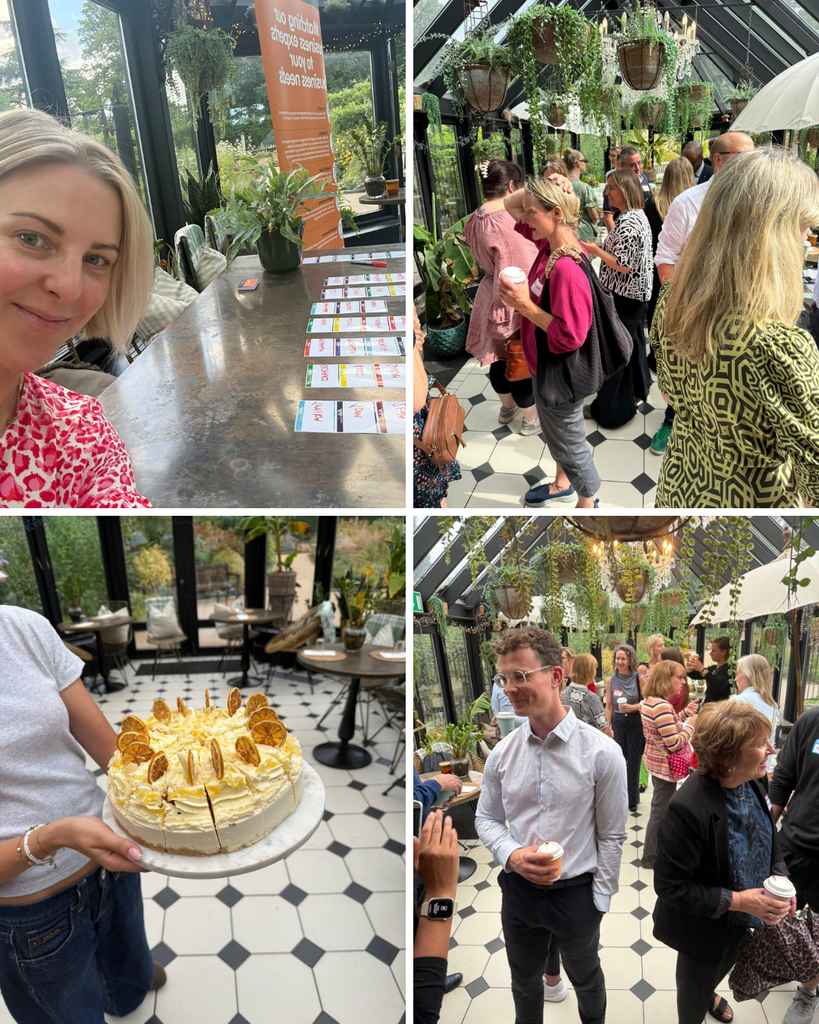
Birthday Celebrations
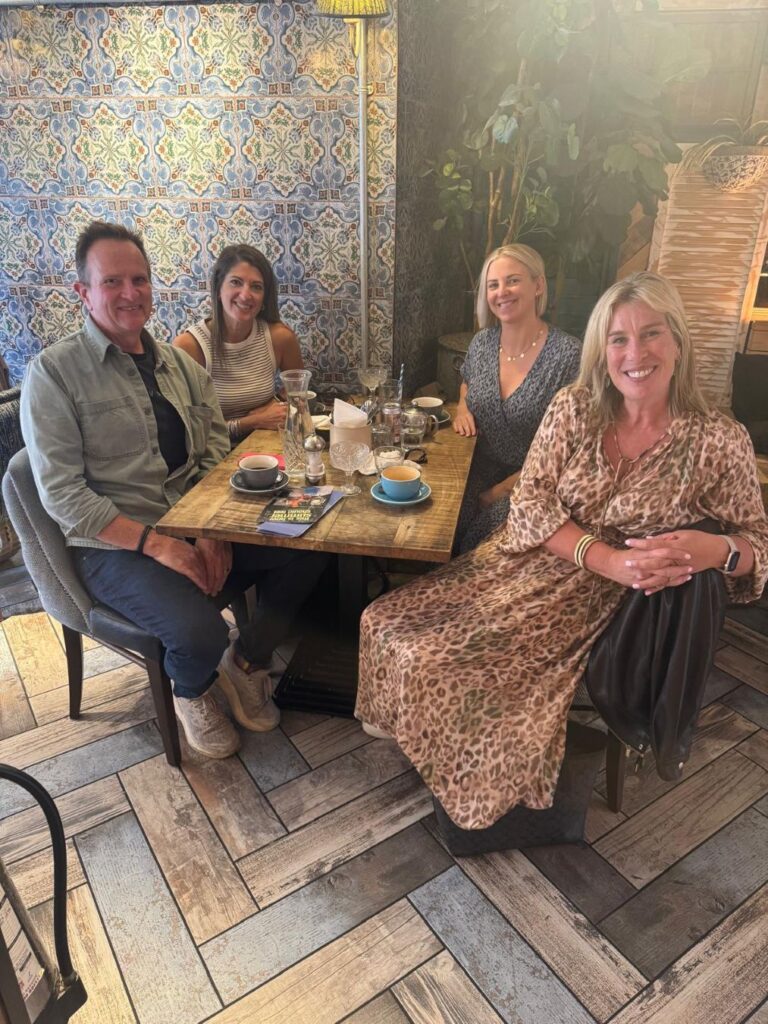
You can read more about Natasha here. And to learn more about the Get Ahead franchise opportunity please click here.
About the Author

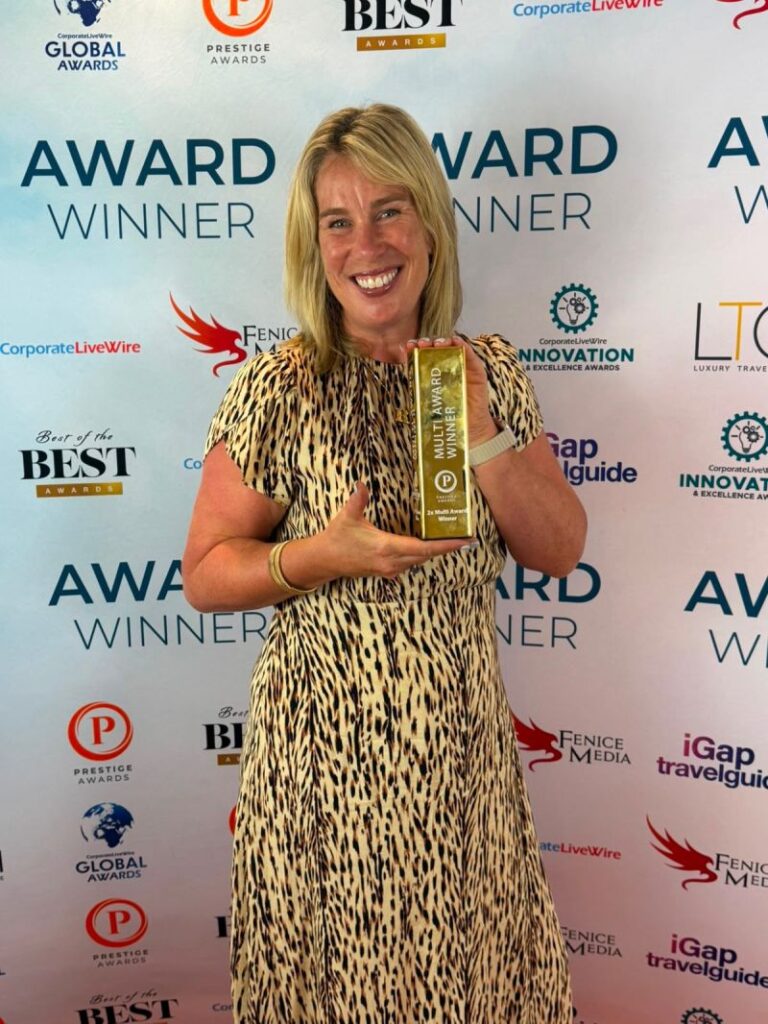
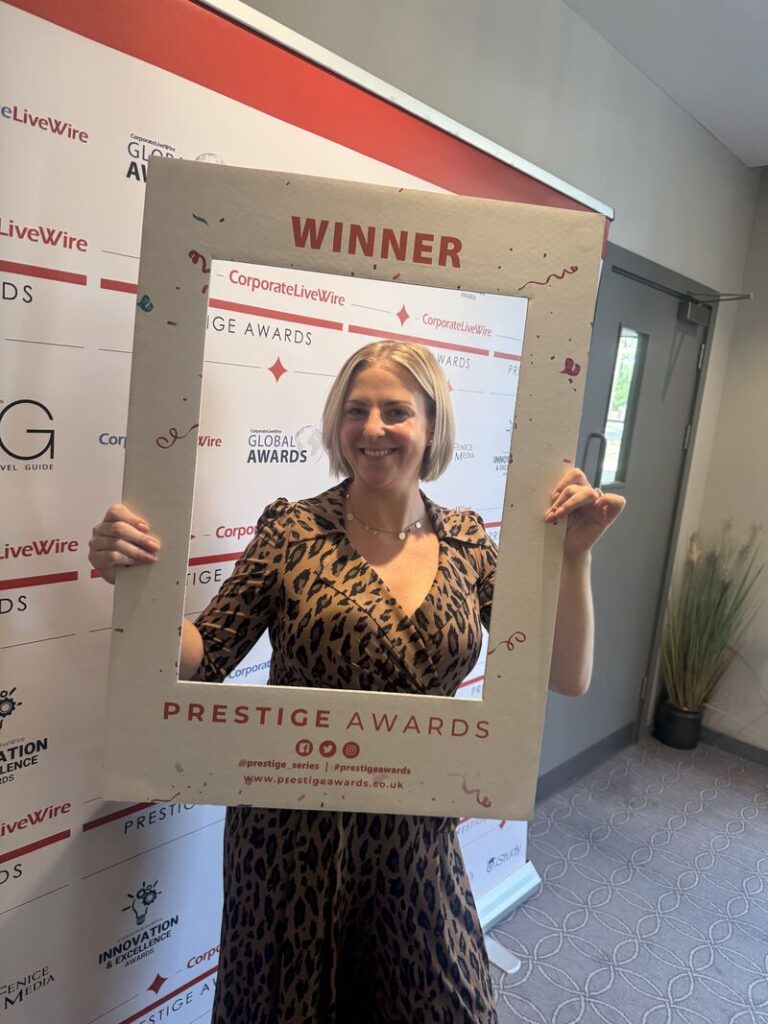
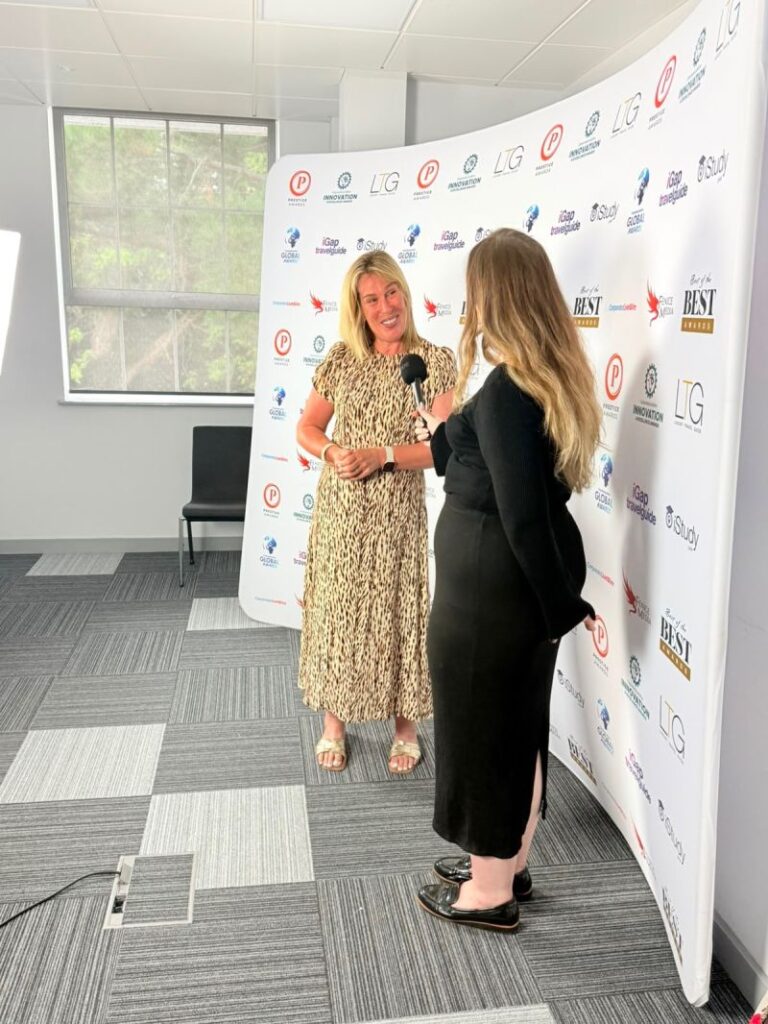
Get Ahead has been named Business Support Service of the Year 2026/27 at the Prestige Awards.

Founder Rebecca Newenham collected the award, joined by Natasha Doran, one of Get Ahead’s franchisees, at a ceremony celebrating businesses across the UK and beyond.

Rebecca said:

“It’s recognition not just for me but for every single person across the Get Ahead network who shows up for our clients day in, day out.

Thank you to everyone who’s been part of this journey – clients, franchisees and the wider Get Ahead family. This one’s for you!“

Rebecca singled out Natasha as someone who embodies what the award represents: hard work, a strong interest in the local business community, and a real wish to see the businesses she works with thrive.

The award also marks something of a milestone. Rebecca started Get Ahead from her kitchen table sixteen years ago. Since then it has grown into a UK-wide network, built on the same values that shaped it from day one: reliability, flexibility, and a focus on the people behind the business.

Rebecca Newenham at the Prestige Awards
ReNatasha Doran at the Prestige Awards
Rebecca Newenham at the Prestige Awards

If you’re running a growing or owner-led business and want the kind of support this award recognises, get in touch with the Get Ahead team to find out how we can help.

A room full of people who actually listen to each other is still worth more than any amount of scrolling

I hosted my first networking event in 2011, back when “networking” wasn’t something founders talked about doing strategically, it was just something you did or didn’t do. It was called Ladies at 11, launched for one of my early clients: an all-women group, membership-based, visitors welcome, monthly, with the classic elevator-pitch-round-the-room format that most business networking still ran on at the time. The business behind it folded after about eighteen months. By then I’d worked out that I loved hosting networking events far more than I’d expected to.

So I didn’t stop. Ladies at 11 morphed into a partnership with The Best Of Guildford to become Guildford Ladies, another all-women, paid, structured group, which I ran alongside Sally Castro-Gouveia for several years. Around the same time I helped Paul Bridgland get Connect Surrey off the ground: fortnightly breakfast networking, paid membership, elevator pitches again. Different rooms, different formats, but the same underlying instinct each time. Get people talking to each other properly, and good things tend to follow.

Where the free, informal version came from

In 2019 I noticed something the paid, structured model wasn’t covering. I’d been along to LinkedIn Local Farnham and liked how informal it felt against everything I’d run up to that point. No membership fee, no pitch round, just people who’d connected online finally meeting face to face. I brought the format to Guildford, and it grew quickly enough that we soon outgrew our first venue.

With that growth came the realisation that I had a great way to put a spotlight on local venues that deserved more footfall. Over the years we’ve built genuine partnerships with a real range of venues: hotels like The Harbour, the Holiday Inn and The Mandolay, pubs and clubs, co-working spaces, restaurants and cafes such as Mandira’s Kitchen, even a care home and a golf club. The full list is probably a post of its own, but the aim behind it hasn’t changed: give a local venue a room full of potential new customers, and give the meeting itself a fresh setting each time.

Another interesting change came a little later. Those early LinkedIn Local meetings were all evenings, and I started noticing who wasn’t in the room anymore: many of the women who’d been core to Ladies at 11 and Guildford Ladies simply weren’t showing up. So we added morning meetings. They turned out to be some of the most successful sessions we run, especially for women, and it’s probably the single change I’m proudest of making to the format over the years.

This was also the catalyst for Get Connected, set up by our Get Ahead Regional Directors Kristy Roff and Suzanne Evett. In collaboration with Metro Bank the Get Ahead team now run more than twenty free networking meetings a month across the country.

Keeping the room together through lockdown

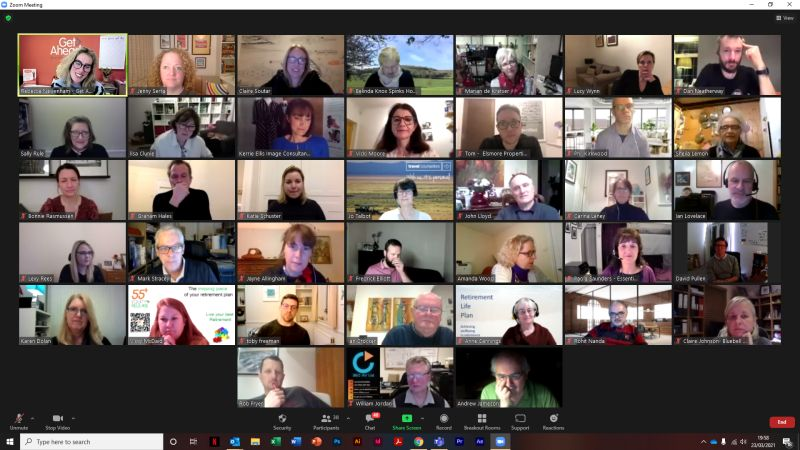
When lockdown hit, I made a decision that shaped everything that came after. Rather than let years of momentum and connection quietly evaporate, I moved LinkedIn Local entirely online. We used Zoom’s breakout room function, with trusted regulars hosting their own rooms, and one of our GAVA Virtual Experts facilitating in the background so the technology never got in the way of the conversation.

Networking during Lockdown. That could have been a Talking Heads song...

(Networking during Lockdown by Talking Heads)

Those online meetings became a genuine monthly highlight for a lot of people, at a point when very little else was. They also did something I hadn’t expected: they pulled in people from well beyond Guildford, since geography stopped being a barrier the moment the meeting was on a screen rather than in a room. When lockdown finally ended, we came back in person with a community that had properly bonded through a difficult stretch of time together. If anything, we came back stronger than we went in.

What’s stayed the same

A handful of small habits have become part of the fabric of these meetings over time, and I don’t think any of them were planned so much as noticed and kept. Handwritten name badges rather than printed ones. Someone on the door at every meeting, so nobody arrives and has to work out where to stand on their own. An explicit no-pitching rule. None of it is dramatic, but it adds up to a room people come back to because they made a friend last time, not just a contact. That’s really the belief underneath all of it: these meetings are about connections and friendships first, and business, when it comes, comes as a byproduct rather than the point.

Vicki Moore is a wonderful example. She runs a branded chocolate bar business called All About The Wrapper, and I met her at a Guildford networking meeting years ago. She’s become a truly supportive friend since, not just a name in my contacts list.

Client relationships have started the same way. KJ Smith are one I can name, with our first meeting in a LinkedIn Local room rather than through anything that looked like a sales conversation.

What founders get wrong about networking

The two mistakes I see most often are related. Some people arrive expecting to walk out with business in hand from the first meeting, and get discouraged when that doesn’t happen. Others get so anxious about their own thirty seconds, wherever the format still calls for a pitch, that they stop listening to anyone else’s. Both come from treating the room as a transaction rather than a relationship.

The other thing I’d tell any founder starting out is that not every networking event suits every person. Some people thrive somewhere more formal, BNI is the obvious example, and that’s completely fine. Part of getting real value from networking is finding the room that actually suits how you work, rather than assuming the first one you try is the one that should fit.

The bit I don’t usually say out loud

One honest downside: some people assume that hosting is simply my job, something I do because it’s work rather than because I choose to. It isn’t, and managing that assumption, gently and repeatedly, is something I still have to work on.

Still evolving

In the last few years we’ve introduced sponsorship into the format, and put real thought into it. We built a proper sponsor pack, designed to help a sponsoring business get the most out of what’s still a small investment. It works because the audience behind it is real: our Linked In page alone has grown to nearly three thousand followers, and our mailing list means a sponsor gets seen well beyond whoever happens to be in the room that day. It’s a way of keeping the free, no-pitching spirit of the meetings intact while still giving something back to the businesses that help make them possible.

Our evolution hasn’t stopped. We’ve recently gone live with our new Link Up brand, the next step on a journey rather than a departure from anything that came before it. The name changes. The reason I keep turning up consistently for every meeting doesn’t.

Fifteen years on from a hired room in Guildford and a membership-only ladies’ group, my conservative estimate is that I have hosted in excess of 250 networking meetings in that time. The thing that hasn’t changed since 2011 is the reason I keep doing it. A room full of people who actually listen to each other is still worth more than any amount of scrolling.


Taking Time Off: A Business Owner’s Guide to Switching Off (Almost)

Every business owner I speak to says the same thing: “I need a holiday.” And yet, when it comes to actually booking one, taking time off, and being fully present somewhere other than their inbox, most of them find a reason not to.

I’ve been running Get Ahead for over a decade. I’ve had to learn, sometimes the hard way, that taking time off isn’t a luxury. It’s a business decision. The planning, prioritisation and delegation that makes a holiday possible are the same disciplines that make a business scalable.

Here’s what I’ve learned, and what I now share with every business owner I work with.

Why do so many business owners struggle to take time off?

Because the business feels like it needs them. And often, it genuinely does, but usually because systems, handovers and trusted support haven’t been put in place yet. The business isn’t the problem. The infrastructure around it is.

When I talk to owners who haven’t had a proper break in years, it’s rarely because they don’t want one. It’s because the idea of stepping away feels riskier than staying put. That’s the thing we need to solve.

What does good preparation actually look like?

It starts well before you pack. I’d suggest a minimum of four weeks’ lead time if you’re going away for more than a few days. The core areas to address are:

  • Priorities: what absolutely must happen while you’re away, and what can wait
  • Delegation: who is responsible for what, with clear authority to make decisions, not just to escalate
  • Systems: are your CRM, accounts, files and shared drives in order? Can someone else navigate them without you?
  • Communication: who is your point of contact for clients, and what’s the protocol if something genuinely urgent arises?

The key word in that third point is delegation with authority. Handing tasks to someone and then remaining the bottleneck for every decision isn’t delegation. It’s just distributed stress. Trust the people you’ve briefed, and let them get on with it.

What about HR considerations when you’re the one stepping away?

This is something business owners with small teams often overlook. Before you go:

  • Make sure any team members or contractors have a clear point of contact in your absence, with the authority to make day-to-day decisions
  • Set clear expectations about what warrants contacting you and what doesn’t
  • Check that any outstanding HR matters (appraisals, onboarding, contracts) are resolved or safely deferred
  • If you use a virtual team, ensure they’re fully briefed and have everything they need before you leave

The businesses that run smoothly in an owner’s absence are the ones where the team has been trusted, briefed properly, and given room to act. Not the ones where the owner is fielding WhatsApps on the beach.

How do you handle the personal side of being away? The dog, the cat, the house?

This is where our Lifestyle Manager service comes in, and honestly, it’s one of the things I’m most proud of offering. The mental load of a holiday isn’t just professional. It’s personal.

Sorting pet care, ensuring the house is looked after, managing deliveries, handling the things that pile up at home while you’re away: these are all things that can be handed off. A good Lifestyle Manager takes the whole list, not just the work side of it.

When the personal logistics are sorted, you actually get to have a holiday. Not just a change of location where you’re still mentally juggling everything. And knowing that Sydney (aka The Prince) is in good hands and enjoying himself means that I can too!

Do you ever stay contactable while you’re away?

Yes, deliberately and on my own terms. I make sure someone knows how to reach me if something genuinely needs a call. In practice, in all the years I’ve been running Get Ahead, that call has never come.

But knowing it’s possible if needed means I can actually relax. It’s a safety net I’ve chosen to have, not a leash. There’s a difference. And building the right team around you is what makes that distinction possible.

What’s your pre-holiday checklist?

Here’s what I work through before I go anywhere:

  • Goals reviewed: what needs to be done before I leave, and what can genuinely wait
  • Delegation confirmed: named people, clear responsibilities, authority granted
  • Systems in order: shared drives, CRM, accounts, inboxes all accessible and up to date
  • Social media scheduled: posts queued for the duration, evergreen content repurposed where needed
  • Client communications sent: anyone who needs to know I’m away has been told, with a named contact
  • Virtual support briefed: telephone answering, email management, any ongoing tasks handed over with a proper brief
  • Personal logistics sorted: pet care, house, anything domestic that would otherwise be sitting in the back of my mind

What’s the business case for actually taking the holiday?

You come back better. Clearer thinking, more energy, more perspective on the things that actually matter. Every owner I know who has properly stepped away and come back says the same thing: they could see the business more clearly from the outside than they ever could from inside it.

The planning that goes into a good handover also tends to reveal gaps in your systems that you’d been papering over. It’s an audit you didn’t know you needed.

And frankly, if your business can’t function without you for a week or two, that’s the most important signal you could have about what to fix next.

How can Get Ahead help?

Whether you need telephone answering and email management while you’re away, a virtual assistant to keep things ticking over, or a Lifestyle Manager to handle the personal side of life, we’ve been helping business owners take proper breaks for over a decade.

Talk to your local Regional Director about what cover would look like for your business. You might be closer to a real holiday than you think.

www.getaheadva.com or call 0330 223 7580


The Latest from get Ahead