Why I still host networking events, 15 years on
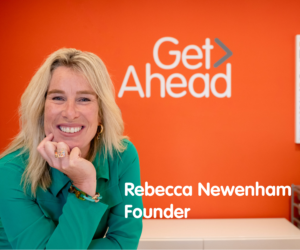
By Rebecca Newenham
A room full of people who actually listen to each other is still worth more than any amount of scrolling
I hosted my first networking event in 2011, back when “networking” wasn’t something founders talked about doing strategically, it was just something you did or didn’t do. It was called Ladies at 11, launched for one of my early clients: an all-women group, membership-based, visitors welcome, monthly, with the classic elevator-pitch-round-the-room format that most business networking still ran on at the time. The business behind it folded after about eighteen months. By then I’d worked out that I loved hosting networking events far more than I’d expected to.
So I didn’t stop. Ladies at 11 morphed into a partnership with The Best Of Guildford to become Guildford Ladies, another all-women, paid, structured group, which I ran alongside Sally Castro-Gouveia for several years. Around the same time I helped Paul Bridgland get Connect Surrey off the ground: fortnightly breakfast networking, paid membership, elevator pitches again. Different rooms, different formats, but the same underlying instinct each time. Get people talking to each other properly, and good things tend to follow.
Where the free, informal version came from
In 2019 I noticed something the paid, structured model wasn’t covering. I’d been along to LinkedIn Local Farnham and liked how informal it felt against everything I’d run up to that point. No membership fee, no pitch round, just people who’d connected online finally meeting face to face. I brought the format to Guildford, and it grew quickly enough that we soon outgrew our first venue.
With that growth came the realisation that I had a great way to put a spotlight on local venues that deserved more footfall. Over the years we’ve built genuine partnerships with a real range of venues: hotels like The Harbour, the Holiday Inn and The Mandolay, pubs and clubs, co-working spaces, restaurants and cafes such as Mandira’s Kitchen, even a care home and a golf club. The full list is probably a post of its own, but the aim behind it hasn’t changed: give a local venue a room full of potential new customers, and give the meeting itself a fresh setting each time.
Another interesting change came a little later. Those early LinkedIn Local meetings were all evenings, and I started noticing who wasn’t in the room anymore: many of the women who’d been core to Ladies at 11 and Guildford Ladies simply weren’t showing up. So we added morning meetings. They turned out to be some of the most successful sessions we run, especially for women, and it’s probably the single change I’m proudest of making to the format over the years.
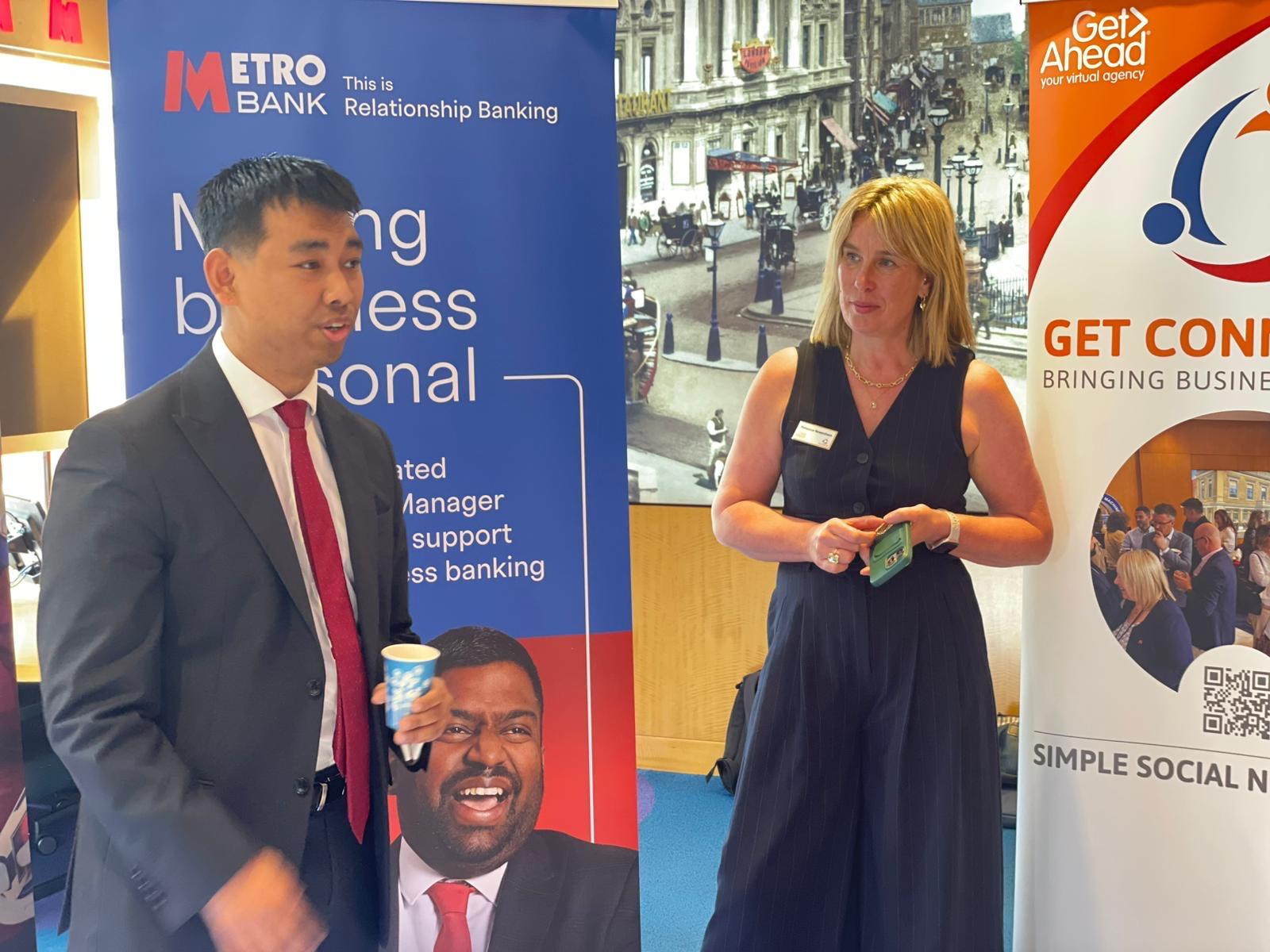
This was also the catalyst for Get Connected, set up by our Get Ahead Regional Directors Kristy Roff and Suzanne Evett. In collaboration with Metro Bank the Get Ahead team now run more than twenty free networking meetings a month across the country.
Keeping the room together through lockdown
When lockdown hit, I made a decision that shaped everything that came after. Rather than let years of momentum and connection quietly evaporate, I moved LinkedIn Local entirely online. We used Zoom’s breakout room function, with trusted regulars hosting their own rooms, and one of our GAVA Virtual Experts facilitating in the background so the technology never got in the way of the conversation.
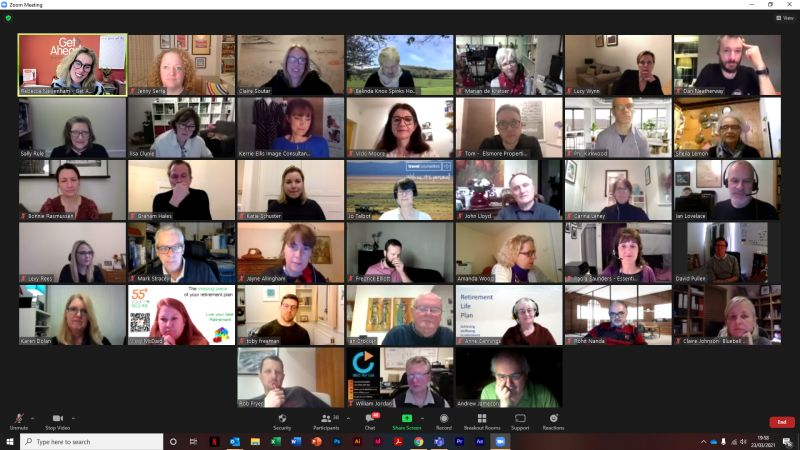
(Networking during Lockdown by Talking Heads)
Those online meetings became a genuine monthly highlight for a lot of people, at a point when very little else was. They also did something I hadn’t expected: they pulled in people from well beyond Guildford, since geography stopped being a barrier the moment the meeting was on a screen rather than in a room. When lockdown finally ended, we came back in person with a community that had properly bonded through a difficult stretch of time together. If anything, we came back stronger than we went in.
What’s stayed the same
A handful of small habits have become part of the fabric of these meetings over time, and I don’t think any of them were planned so much as noticed and kept. Handwritten name badges rather than printed ones. Someone on the door at every meeting, so nobody arrives and has to work out where to stand on their own. An explicit no-pitching rule. None of it is dramatic, but it adds up to a room people come back to because they made a friend last time, not just a contact. That’s really the belief underneath all of it: these meetings are about connections and friendships first, and business, when it comes, comes as a byproduct rather than the point.
Vicki Moore is a wonderful example. She runs a branded chocolate bar business called All About The Wrapper, and I met her at a Guildford networking meeting years ago. She’s become a truly supportive friend since, not just a name in my contacts list.
Client relationships have started the same way. KJ Smith are one I can name, with our first meeting in a LinkedIn Local room rather than through anything that looked like a sales conversation.
What founders get wrong about networking
The two mistakes I see most often are related. Some people arrive expecting to walk out with business in hand from the first meeting, and get discouraged when that doesn’t happen. Others get so anxious about their own thirty seconds, wherever the format still calls for a pitch, that they stop listening to anyone else’s. Both come from treating the room as a transaction rather than a relationship.
The other thing I’d tell any founder starting out is that not every networking event suits every person. Some people thrive somewhere more formal, BNI is the obvious example, and that’s completely fine. Part of getting real value from networking is finding the room that actually suits how you work, rather than assuming the first one you try is the one that should fit.
The bit I don’t usually say out loud
One honest downside: some people assume that hosting is simply my job, something I do because it’s work rather than because I choose to. It isn’t, and managing that assumption, gently and repeatedly, is something I still have to work on.
Still evolving
In the last few years we’ve introduced sponsorship into the format, and put real thought into it. We built a proper sponsor pack, designed to help a sponsoring business get the most out of what’s still a small investment. It works because the audience behind it is real: our Linked In page alone has grown to nearly three thousand followers, and our mailing list means a sponsor gets seen well beyond whoever happens to be in the room that day. It’s a way of keeping the free, no-pitching spirit of the meetings intact while still giving something back to the businesses that help make them possible.
Our evolution hasn’t stopped. We’ve recently gone live with our new Link Up brand, the next step on a journey rather than a departure from anything that came before it. The name changes. The reason I keep turning up consistently for every meeting doesn’t.
Fifteen years on from a hired room in Guildford and a membership-only ladies’ group, my conservative estimate is that I have hosted in excess of 250 networking meetings in that time. The thing that hasn’t changed since 2011 is the reason I keep doing it. A room full of people who actually listen to each other is still worth more than any amount of scrolling.
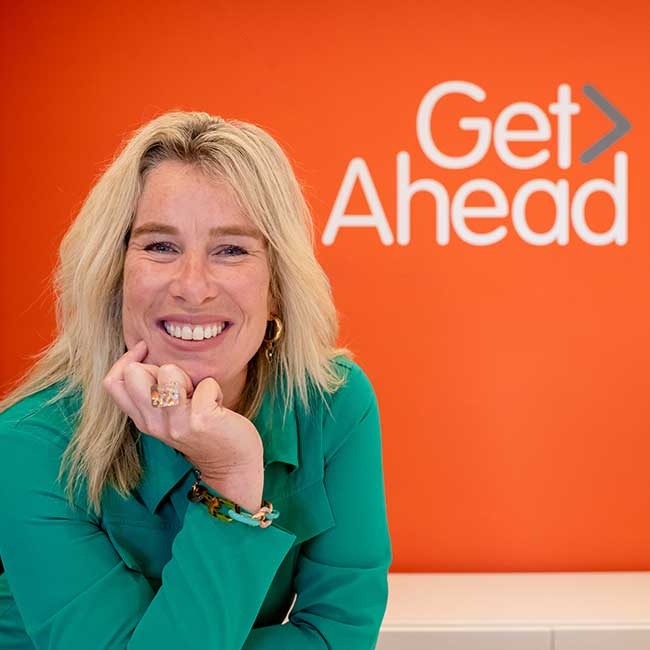
Rebecca Newenham is the founder of Get Ahead, an award-winning virtual assistant and outsourcing franchise she launched in 2010 following a successful career in corporate retail buying. With a team of over 90 virtual assistants and franchisees, Get Ahead provides flexible marketing and business support to growing businesses across the UK.
A passionate advocate for flexible working, Rebecca is also a Franchise Consultant at Ashtons, helping founders scale with clarity and confidence. She hosts Link Up Networking Guildford and is a Baby Naming Celebrant, proof that a purposeful career doesn’t have to fit a single mould.
At the heart of everything Rebecca does is people: connecting them, supporting them and helping them build businesses that genuinely work for their lives.