Sexual Harassment Law Changes: Are You Ready? | Get Ahead
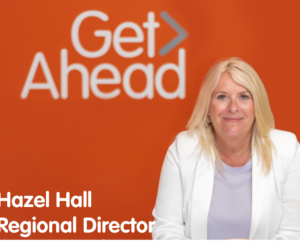
By Hazel Hall

Sexual Harassment. The Rules Are Changing From October
Is your sexual harassment policy doing what you think it is?
If your policy is sitting quietly in a folder, it’s not protecting your organisation. With the upcoming rule changes, employers must be able to prove they took all reasonable steps to prevent harassment, not just point to a document.
That deadline is closer than it feels. October is a matter of weeks away, and a policy rewrite, manager training and a proper risk assessment all take time to do properly. The organisations that start now will be ready. The ones that wait until September will be rushing.
The Timeline You Need to Know
Pre-2023: Under the Equality Act 2010, employers could usually defend claims by showing they had a policy.
2024: The Worker Protection (Amendment of Equality Act 2010) Act introduced a duty to take reasonable steps to prevent sexual harassment.
October 2026: The bar rises again. Employers will need to evidence all reasonable steps, a materially higher standard.
This isn’t just semantics. It’s a change in what tribunals will look for.
What’s Changing, and Why It Matters
From October, employers face three shifts at once:
- A tougher legal test: “all reasonable steps,” not just reasonable ones.
- Liability for third-party harassment: if a client, customer or contractor harasses your staff and you haven’t taken preventative action, you can be held responsible.
- A closed door on quiet settlements: since April 2026, sexual harassment disclosures count as whistleblowing, which means an NDA can no longer be used to keep a complaint silent.
If you have client-facing teams, perhaps at events, in hospitality, in sales, in public-facing or on-site roles, you now carry real legal exposure unless you’ve assessed and mitigated the risks.
What “All Reasonable Steps” Looks Like in Practice
You’ll need to be able to show:
- A clear, up-to-date policy that staff have read and acknowledged.
- Managers who are trained and confident handling reports.
- Accessible reporting routes that employees actually know about.
- A written risk assessment covering the specific risks in your organisation, especially where staff interact with third parties.
- Evidence of action taken as a result of that assessment.
That last point is where many organisations will fall short. A risk assessment that never changes anything won’t help you in a tribunal.
One complication worth knowing about: the Act itself doesn’t define “all reasonable steps.” Clarifying regulations aren’t expected until 2027, after the duty already takes effect. Employers are being held to a standard nobody has fully spelled out yet, which is exactly why a proper audit trail matters more than guesswork.
Four Situations That Could Now Catch You Out
The rules can feel abstract until you picture them against a normal working week. Here’s what the new exposure actually looks like.
The site visit.
A client’s contractor makes repeated comments to a female team member during a multi-week installation. She says nothing at the time because he’s the client’s man, not yours. Under the new rules, if you haven’t assessed or mitigated that risk in advance, the liability sits with you, not just the contractor’s employer.
The exit that didn’t stay quiet.
An employee raises a harassment complaint and you reach a settlement with a standard NDA clause. Since April 2026, that clause doesn’t hold if the disclosure counts as whistleblowing, which sexual harassment complaints now do. The agreement you thought closed the matter may not.
The Christmas party.
Alcohol, a supplier’s rep, an off-colour comment to a junior member of staff. Historically this sat in a grey area. Now, if you can’t show you’d assessed the risk of exactly this kind of event and briefed staff and suppliers accordingly, you’re exposed.
The reporting route nobody uses.
Your handbook has a policy. Nobody’s read it in two years, and the only reporting route is “tell your manager,” who’s never been trained on what to do next. A tribunal won’t accept the policy’s existence as evidence of all reasonable steps. It will ask what you actually did.
The Cost of Getting This Wrong
Tribunals can apply a 25% uplift to compensation if you haven’t met the preventative duty. That’s on top of the underlying award. If the harassment claim itself is significant, that uplift becomes very expensive very quickly.
The scale of the underlying problem is worth remembering too. A 2023 TUC poll found that 58% of women had experienced harassment at work, but fewer than one in three reported it. The gap between what happens and what gets raised is exactly where legal and reputational risk builds up quietly.
Your October 2026 Readiness Check
Ask yourself:
- Is your policy current, and does it explicitly cover third-party harassment?
- Do you have proof that staff have read and acknowledged it?
- Have managers received practical training on recognising and responding to harassment?
- Is there a reporting process that employees understand and can use?
- Have you completed a written risk assessment for higher-risk roles or environments?
- Could you pull all of this evidence together quickly if you needed to?
If any answer is no or not sure, you’ve got work to do, and October is closer than your diary makes it feel.
We Are Here to Help
We carry out sexual harassment prevention audits that assess where your business sits against the “all reasonable steps” standard.
The audit covers your policy, your reporting process and your risk exposure in third-party environments.
We also deliver the manager training your team needs so that when something is reported, it gets handled properly from the start.
There’s a natural lead time to doing this properly, audits, training and risk assessments typically take a few weeks to land, not days, so the earlier you start, the more comfortably you clear before October.
If you want to be ready when October arrives rather than scrambling in September, get in touch now. Call us on 0330 223 7580.
We’re happy to talk you through what it looks like for your business.
You can learn more about our HR services here.
About the Author

Hazel is the Get Ahead Regional Director for Kent and East Sussex, bringing over two decades of senior-level experience that spans Russian linguistics, marketing, and a long career in Human Resources across the IT, engineering and charity sectors.
For many years, Hazel was part of the Senior Leadership Team at a global engineering company, navigating a venture capital-backed Management Buyout, leading significant organisational change, and representing the business across the Far East, North America and South America. In 2018, she accepted the Queen’s Award for Enterprise at Buckingham Palace on behalf of her organisation.
Hazel leads Get Ahead’s nationwide HR Essentials service, helping SMEs build compliant, practical people foundations that support sustainable growth. Her areas of expertise include HR and people management, strategic business development, training and development, and coaching.
Read more about Hazel here.