Is Social Media Worth It for Your Business? Part 2: Pinterest
By Vicky McKenna
Before I became a Regional Director for Get Ahead, I spent years as a Buying Director for major UK retailers and then ran my own social media agency, with a specialism in Pinterest for business. I’ve used these platforms commercially. I’ve seen what works, what doesn’t, and what’s simply not worth a busy business owner’s time. This series is my honest perspective on each one. No strategy guides. No content calendars. Just a straight answer to the question you’re probably already asking.
Is Pinterest Worth It for Your Business?
This one is personal.
Pinterest was the platform I built my agency around. For several years, helping businesses understand and use Pinterest properly was my work. So when I tell you my honest view of whether it’s worth your time, you can trust that it comes from somewhere real – not from a blog post I read, or a course I took, but from years of working inside the platform on behalf of businesses that ranged from small independents to established brands.
Here’s what I learned: Pinterest is one of the most misunderstood platforms available to small businesses. And the misunderstanding cuts both ways. Some businesses dismiss it entirely – it’s for mood boards, they say, or for people planning weddings. Others pile in expecting quick results and leave frustrated. Both responses miss what Pinterest actually is.
Pinterest is not social media
This is the single most important thing to understand about Pinterest, and the thing that most businesses get wrong before they even begin.
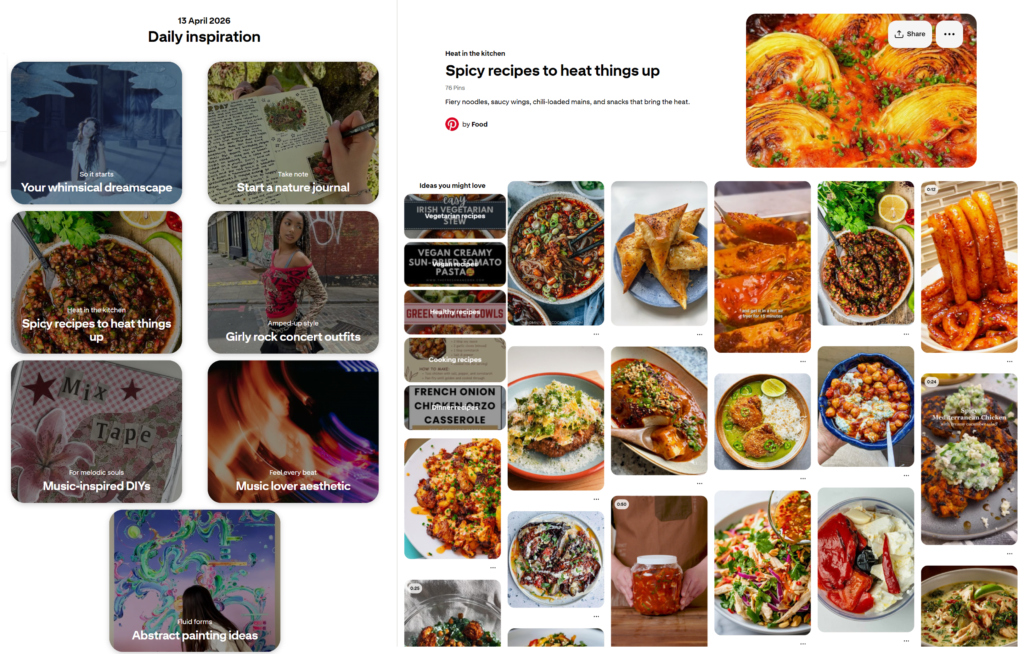
Pinterest is a visual search engine. Not a social network. Not a content feed. A search engine – one where people go to find ideas, plan purchases, and research decisions that often take weeks or months to complete.
When someone opens Instagram, they’re scrolling. Consuming. Reacting. When someone opens Pinterest, they’re looking for something specific, or exploring a category they’re already interested in. The intent is different. And that changes everything about how content works on the platform.
A post on Instagram has a lifespan measured in hours. By the next morning, it’s effectively invisible. A well-optimised Pin on Pinterest can surface in search results for months – sometimes years. I’ve seen Pins driving steady traffic to a business website long after the person who created them had stopped actively using the platform. That kind of content longevity simply doesn’t exist on any other major social channel.
I saw this play out clearly in practice. For one client, a marketing agency, Pins we’d created months earlier were still driving over 100 visitors a week to their website and steadily growing their email list. It’s a very different model to most platforms – slower to build, but once it works, it keeps working.
Who Pinterest genuinely works for
Pinterest works best for businesses that sell something people aspire to, plan around, or return to repeatedly. The platform’s own data consistently shows its strongest categories, and after years of working in this space, my experience bears that out.
If your business operates in interiors, home improvement, food and recipe content, weddings and events, fashion, beauty, travel, crafts, or gardening – Pinterest is almost certainly worth serious consideration. These aren’t arbitrary categories. They reflect how people actually use the platform: to plan a kitchen renovation, to find a recipe for Saturday, to build a mood board for a wedding that’s a year away.
The businesses that thrive on Pinterest share a few common characteristics. Their products or services are visually appealing. Their customers make considered, planned purchases rather than impulse decisions. And there’s a clear aspiration attached to what they sell – a vision of how life could look, feel, or be improved.
I saw this particularly clearly with a client in the food space, a well-known chef promoting her books and content. Because the content was so visual and aspirational, it translated easily into Pinterest. Over a four-week period, impressions increased from around 90,000 to nearly 400,000, with strong growth in engagement, saves and outbound clicks. It was a good example of how the right type of content can gain real traction on the platform when it aligns with how people use it.
Who it doesn’t work for – and why
Being direct about this is important, because Pinterest isn’t for everyone and pretending otherwise wastes people’s time.
If you run a B2B services business, a professional services firm, or any business where the purchase decision is driven primarily by credentials and conversation rather than visual inspiration – Pinterest is unlikely to be a strong channel for you. It’s not that your potential clients aren’t on Pinterest personally. Many of them are. But they’re not there to think about hiring an accountant or finding a logistics partner. The mindset is wrong for that kind of decision.
Similarly, businesses targeting a primarily male demographic have historically found Pinterest more challenging – the platform’s user base skews heavily female, particularly in the UK. This is changing, slowly, but it’s worth factoring in.
And businesses that can’t commit to creating quality visual content consistently will struggle. Pinterest rewards accounts that post regularly with well-designed, properly keyword-optimised Pins. An account that posts in bursts and then goes quiet doesn’t build the momentum the algorithm rewards.
I’ve also had situations where Pinterest wasn’t the right fit. In one case, I worked with a business offering bespoke, made-to-order products – visually strong, but very niche and reliant on a more considered, relationship-led sales process. Even with consistent activity, it didn’t deliver enough return to justify the time investment. It highlighted how important it is to match the platform not just to the product, but to how customers actually search and buy.
What businesses consistently get wrong
After years of working with businesses on Pinterest, the mistakes I saw most often weren’t about design or posting frequency. They were about fundamentals.
The first is treating Pinterest like Instagram. Posting lifestyle images with no keywords, no description, no thought given to what someone might actually be searching for. Pinterest is a search engine. If your Pins aren’t optimised for the words and phrases your customers use when they’re looking for what you offer, they will not be found – no matter how beautiful they look.
The second is expecting fast results. Pinterest builds slowly. In the early months, it can feel like nothing is happening. Businesses that give up after six weeks – which many do – never see the compounding effect that makes Pinterest genuinely valuable. The accounts that commit to twelve months of consistent, well-structured activity are the ones that start to see the platform working the way it’s supposed to.
Pinterest builds slowly. The accounts that commit to twelve months of consistent, well-structured activity are the ones that start to see the platform working the way it’s supposed to.
The third mistake is ignoring the link back to the website. Every Pin should lead somewhere useful – a product page, a blog post, a service description. Pinterest is one of the strongest social media drivers of referral traffic when it’s set up correctly. Businesses that Pin without thinking about the destination are missing the most commercially valuable part of the platform.
The time investment – honestly assessed
Pinterest requires less real-time engagement than platforms like Instagram or Facebook – there’s no expectation that you’ll respond to comments within the hour, and the lack of an algorithmically-driven feed means you’re not competing for immediate attention. In that sense, it suits time-poor business owners reasonably well.
But it does require consistent creative output. Well-designed Pins, properly written descriptions, a structured board strategy. If you don’t have the capacity to create quality visual content regularly – either in-house or with support – Pinterest will underdeliver. It rewards the businesses that treat it as a long-term investment rather than a quick-win channel.
A final thought
Pinterest isn’t for every business.
But for the ones it suits, it’s one of the most misunderstood – and underused – platforms available to SMEs.
If you sell something people aspire to, plan around, or come back to repeatedly – and you’re willing to invest consistently over time – it’s worth taking seriously. The question isn’t whether Pinterest is impressive. It’s whether your customers are there, and whether you’re prepared to show up for long enough to let it work.
Pinterest strategy was at the heart of the agency work I did before joining Get Ahead. If you’re wondering whether it could work for your business – or how to approach it properly – I’m always happy to have that conversation.
I’m Vicky McKenna, Regional Director for Get Ahead in Oxfordshire.
If you’d like a conversation about where your business should be showing up, I’d love to hear from you – please get in touch via vicky@getaheadva.com.
Next in the series: Is TikTok Worth It for Your Business?
If you missed Part 1 of this series discussing Facebook, you can find it here.

Regional Director for Get Ahead in Oxfordshire. Former Buying Director for major UK retailers and founder of a social media agency specialising in Pinterest for business. Vicky works with SME owners to find the right support for their business, and writes about the commercial realities of social media, outsourced expertise, and growing a business without burning out.