Should Directors Do Their Own Admin?
Why It Makes No Commercial Sense for Directors to Do Their Own Admin (And When to Change That)
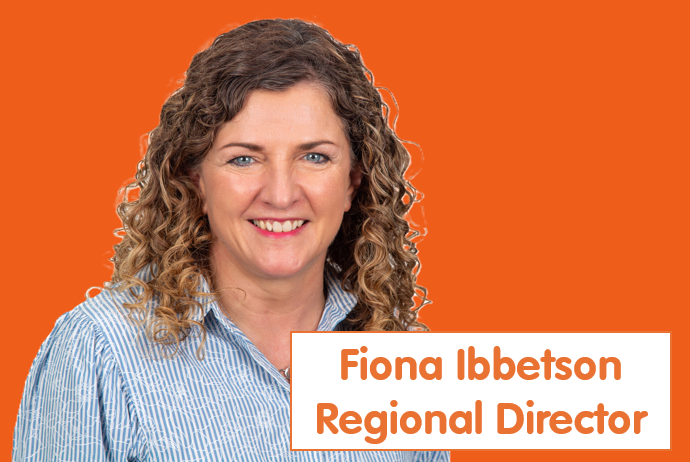
As a Regional Director supporting more than 40 businesses across Yorkshire, I regularly work with growing SMEs with a turnover of between £5m and £20m.
There is a consistent pattern. The business scales. Revenue increases. The board formalises. Governance expectations rise.
And yet directors are still managing their own diaries. Formatting board packs late in the evening. Chasing actions. Rebooking travel. Clearing inboxes. Updating operational spreadsheets.
Not because they lack support. And not because it is required at their level. More often, it is because in the moment it simply feels efficient to “just do it myself”. Over time, it has quietly become the default.
But at a certain stage of growth, that approach stops making commercial sense.
What Is Board-Level Administrative Support?
Board-level administrative support is structured operational assistance that enables directors to focus on strategic decision-making rather than diary management, document preparation or governance tracking.
It is not simply PA support. It is about protecting leadership capacity and strengthening governance processes as businesses mature.
In SMEs approaching or exceeding £10m turnover, the cost of misallocated leadership time becomes increasingly significant.
Should Directors Do Their Own Admin?
Directors are perfectly capable of managing their own administration. The real question is whether it represents the highest commercial return on their time.
A director in a £15m business may cost the organisation £70–£80 per hour once salary and overheads are included. If five hours a week is absorbed by administrative activity, that equates to nearly £20,000 per year – time not spent on strategy, growth or governance.
That is not a criticism. It is arithmetic.
Beyond the cost, there is emerging research showing that many boards today are not positioned to add maximum value. Recent UK analysis of boardroom effectiveness found that only one-third of board directors believe their board is essential to value creation, with many boards focused disproportionately on backwards-looking reporting rather than forward-thinking strategy and growth planning.
This highlights a deeper issue: if boards are structured in a way that limits strategic focus, any diversion of director time into operational tasks compounds that constraint. In growing businesses, leadership time is one of the most expensive and scarce resources available. How it is deployed matters.
The Hidden Cost: Opportunity, Not Efficiency
The greater risk is not the hourly cost. It is the opportunity cost of time lost for reflection, thinking and strategy.
Industry insight suggests that directors are increasingly overwhelmed with information and under-prepared for meetings, in part because boards are not set up effectively and directors are expected to absorb huge volumes of operational detail.
This overload makes it harder to engage deeply with strategic priorities, especially in leaner organisations where external executive support is not yet formalised.
In a £15m business, a 1% margin shift represents £150,000. Even modest improvements in strategic clarity can outweigh the cost of structured support many times over.
The risk is not that directors cannot do their own admin.
The risk is that they are.
When Should a Business Formalise Board Support?
There is no single turnover trigger. But there are warning signs:
- Board meetings are dominated by operational detail
- Directors regularly prepare board materials outside working hours
- Governance documentation lacks structure
- Follow-up actions are inconsistent
These are not failures. They are growth signals.
As organisations mature, informal systems that worked at £3m rarely sustain £15m.
Protecting leadership capacity is a sign of organisational maturity, not extravagance.
What Effective Board Support Looks Like in Practice
Board-level support typically includes:
- Coordinating structured board agendas
- Preparing coherent, accurate board packs
- Tracking decisions and actions
- Managing governance documentation
- Aligning director diaries with strategic priorities
- Ensuring follow-up is completed between meetings
In one of our larger SME clients, providing consistent support to the Commercial Director has released meaningful leadership capacity back into revenue-driving activity. Preparation is sharper. Follow-up is tighter. Strategic focus has improved.
The change was not dramatic. But it was material.
Governance Is Ultimately a Capacity Question
Board effectiveness is not just about who sits around the table.
It is about whether those individuals have the time and clarity to exercise sound judgement.
In growing SMEs, directors often remain highly operational long after the business has outgrown that model.
Supporting directors operationally does not dilute their involvement. It enables better oversight, stronger governance and more considered commercial decisions.
It moves leadership time back to where it has the greatest impact.
In Summary
- Director time is one of the most valuable resources in a growing SME.
- Administrative activity carries a measurable financial and strategic cost.
- Structured board support improves governance and commercial focus.
- Protecting leadership capacity signals organisational maturity.
If you sit on the board of a scaling business, it may be worth asking one simple question:
Are you spending your time where it delivers the highest commercial return?
Because capability is rarely the issue.
Capacity often is.